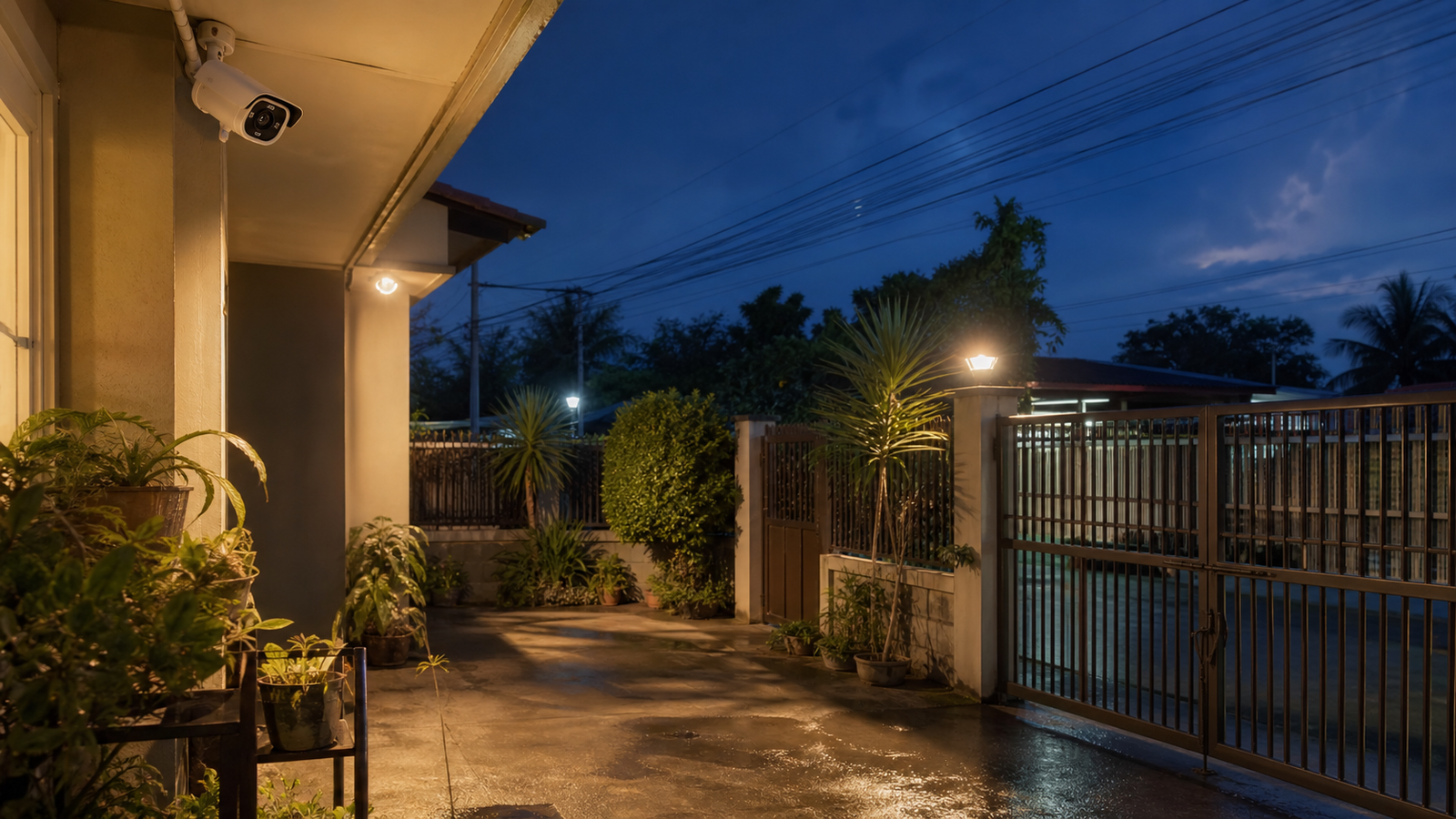
Night footage can look fine in a demo and still disappoint at home. The camera sees the driveway, but the face at the gate is dark. The porch light helps one area but creates glare in another. After rain, reflections on wet concrete make the scene look brighter than it really is.
That is why choosing night-vision cameras is not only about the camera model. For Pampanga homeowners, it is about how the camera, lighting, angle, gate, walls, and daily routine work together after sunset.
Infrared and full-color night options work differently. We match the camera and lighting to each scene because a Pampanga home may have several different lighting conditions around one property.
First Decide What You Need To See At Night
Start with the scene, not the specification. At night, what do you really need to recognize?
- A person standing at the gate
- A vehicle entering the driveway
- A delivery left near the front door
- Movement along a side path
- Activity near a garage, stock area, or small home business
Each one may need a different angle or lighting condition. A wide view of the entire frontage can show movement, but it may not capture useful detail. A tighter view of the gate can help identify visitors, but it may miss the side walkway.
This is why a site visit should include discussion of night use, not only daytime placement.
Infrared And Full-Color Night Vision Work Differently
Infrared night vision usually gives black-and-white footage in dark areas. It is useful when there is little or no light, but details can look flatter. Full-color night cameras need some light to work well, either from existing lamps, street lighting, or supplemental lighting.
Neither option is automatically best for every spot. A dark side path may benefit from infrared. A driveway with steady gate lights may support color footage. A frontage facing bright headlights may need careful angle adjustment more than a more expensive camera.
Ask the installer to explain which areas will be black-and-white, which may be color, and why. If the answer is only “malinaw yan,” ask to discuss the actual lighting at your property.
Watch Out For Glare, Backlight, And Reflections
Night cameras can struggle when the brightest object is not the thing you care about. Common Pampanga home issues include:
- Porch lights shining directly into the lens
- Gate lamps reflecting off metal bars
- Headlights from vehicles entering the driveway
- Wet concrete after rain
- White walls bouncing light into one side of the image
- Insects gathering near warm lights or camera IR
Small placement changes can solve many of these problems. Moving a camera slightly away from a lamp, angling it down, or choosing a different corner may produce clearer footage than simply upgrading equipment.
Place Cameras Where People Pause
At night, useful detail often comes from areas where people naturally stop: pedestrian gates, doorbells, porch steps, garage entrances, and delivery drop-off spots. A camera pointed at a long empty driveway may record movement, but a camera placed to see the gate interaction may answer the more important question: who was there?
For homes in Angeles, San Fernando, Mexico, or Mabalacat, front layouts vary widely. Some gates open directly to a busy road. Some homes have deep driveways. Others have side entrances used by helpers or deliveries. Night camera placement should match those habits.
Do Not Forget The Side And Back Areas
Homeowners often focus on the front gate because it is the most visible area. But side paths, laundry areas, back doors, and dirty kitchens can become weak spots if they are dark and unmonitored.
That does not mean every corner needs a camera. It means each access point should be considered. If an area is used only for storage, maybe lighting improvement is enough. If it is a regular entry path, a camera may be worth planning.
Keep privacy in mind indoors and around neighbors. Aim cameras at your property, not into nearby windows or private spaces.
Test The View Before Calling It Done
A night-capable camera should be checked at night or under similar lighting. Daytime testing cannot confirm glare, IR bounce, or color performance after dark.
During handover, ask for these checks:
- Can the gate area be seen clearly?
- Are faces too far, too dark, or washed out?
- Do headlights overpower the image?
- Are plants, grills, or posts blocking the view?
- Is the camera name clear in the app?
- Can playback be reviewed from the phone?
Use the handover walkthrough to confirm actual night usability and playback, as well as basic camera operation.
Maintenance Affects Night Footage
Night footage can degrade quietly. Dust, spider webs, insects, moisture, and slight camera movement can create halos or blurry patches when infrared light turns on. Plants can also grow into the frame and reflect light back toward the lens.
Include night cameras in routine checks. Clean the housing when needed, trim plants near the view, and review footage after heavy rain or electrical work. If an image suddenly looks foggy at night but fine during the day, the issue may be reflection or lens contamination rather than the recorder.
Buyer Questions To Ask Before Approval
Before choosing night-vision cameras for your Pampanga home, ask:
- Which areas will use infrared and which can show color?
- What existing lights affect the camera view?
- Will the camera capture faces, vehicles, or only general movement?
- How will rain, insects, and dust be managed?
- Can the system be checked on mobile playback?
- What happens if we add gate lights later?
These questions make the quotation more specific and reduce surprises after installation.
Get A Night Plan For The Actual Property
Night security is not about making the house look dramatic on camera. It is about being able to review normal after-dark events clearly: someone at the gate, a vehicle in the driveway, a delivery near the door, or movement along a side path.
CCTV Pampanga can inspect your home, check existing lighting, and recommend camera placement during a free site visit. For many homeowners, that on-site look is the difference between “may camera kami” and footage that is genuinely useful.
Choose night-vision cameras with the whole scene in mind: light, angle, distance, weather, and maintenance. Kapag pinagplanuhan ang gabi, mas malinaw ang footage when you actually need to review it.
Book a free site visit or explore our CCTV installation services to plan cameras around your actual property.
FAQs
Is infrared night vision the same as full-color night vision? No. Infrared usually produces black-and-white footage in dark areas, while full-color night footage needs enough ambient or supplemental light to preserve color.
Why does night footage sometimes look washed out? Glare from porch lights, headlights, white walls, wet concrete, or metal gates can overpower the image. Camera angle and lighting placement matter.
Should night cameras be tested after sunset? Yes. Daytime testing cannot confirm glare, infrared reflection, or whether faces and vehicles are clear after dark.
How do I maintain night-vision cameras? Keep lenses and housings clean, trim plants near the view, check after heavy rain, and review night playback for halos, blur, or blocked angles.
Free site survey — same-day quote. We cover all cities and municipalities.